


To my father, who taught me to begin again. To my mother, who taught me to persevere. To my daughter, who teaches me to hope, still and again.
The Forest We're Planting
A reset, from below the ground.
Prologue: Soil Memory
The name Perello spans nearly four centuries of Mediterranean history.
PERELLÓ — either the echo of the pre-reconquest village of El Perelló, or, in Catalan, the small wild pear: round fruit, green skin, astringent to the tongue. Either way, the name says the soil.
The oldest verifiable trace for the direct PERELLO line: the marriage of Rafel Perelló and Antonina Campins in Inca, April 24, 1671. The direct line settled in Inca by 1671, where the direct line is concentrated through the centuries that follow. For the direct PERELLO line, the geography is concentrated on Mallorca alone. Annexed branches — through marriage and adjacent families — extend across Mallorca and Menorca, the Valencian Community around Alicante, Castilla-La Mancha, Murcia, and Navarre.
In 1891, Antonio Perello left Inca for the Mitidja plain in Algeria. Three generations of landowner farmers transformed an unforgiving stretch of land into fertile ground. My grandfather was born in 1918. Drafted in 1939 at the start of the war, into the 4th Tunisian Tirailleurs Regiment. The Tunisian campaign, then the sea, then Italy — an act of bravery at Colleferro, near Rome, earned him a medal. He returned to France by sea. In 1944, he was wounded by shrapnel fighting for the liberation of Beaune. He came back to Mahelma once his military duty was complete. The marriage came late: my great-grandmother, the matriarch, was looking for his bride within the Spanish diaspora.
Algerian independence in 1962 swept the family from the land. Those who survived, in France, kept only the name, a lost trade, and the intact instinct to begin again.
The survivors of that rupture — among them my father, born in Algeria like his younger sister — rebuilt in metropolitan France. I was raised in that rebuilt house, with the instinct still alive and no land to apply it to.
So I applied it elsewhere.
When I lived in Tangier, in the heart of the medina, I ran a permaculture lab farm. Many experiments. Years of practice. COVID killed the project — not the harvest, the project itself — and I lost that ground the way my grandfathers lost theirs in 1962. Different cause. Same shape. Land you cleared. Work you trusted. An event you did not see coming.
Each generation in this lineage cleared its own arid ground. Each generation lost it differently. The name learns to cross its own ruptures. To plant elsewhere what had been uprooted.
I am writing this from below a canopy I have not yet grown.

From below the ground
What my family lost across several generations, I have lost in less than one life.
I have lost the land. I have lost the work. I have lost the fruit of the work. I have lost the capital that took twenty years to accumulate.
I am writing this from a position that is not the one most manifestos are written from. I am ruined. It is not the first time it has happened in this family. It is not the first time it has happened to me, either. I have lost everything more than once in this life. Each time, what survived was the instinct.
The instinct that survives ruin is what this writing comes from.
The compost does not disgust me. I breathe its smell. I handle it with my bare hands. I know it is where everything begins.
This is the third orchard.

Krakow, or the day I stopped trying to finish well
Before Tangier, there was Krakow.
I arrived for a weekend after a personal rupture. Something said: stay. Stay until you finish L'amour a des limites. A book I had been writing, rewriting, abandoning, taking up again — for sixteen years.
The courage I lacked was not the courage to write. I had written it many times. The courage I lacked was the courage to accept that finishing the book meant releasing the dream of finishing it well.
Sixteen years of perfecting a book that was already finished. I just had not yet given it permission to be imperfectly perfect, and perfectly imperfect.
Krakow was where I gave it that permission.
What I learned there is the operating doctrine of everything I have built since.
The forest you wait to plant until the conditions are perfect is never planted. The book you wait to publish until it is perfect is never published. The product you wait to ship until it is flawless never ships.
What is perfect is what is alive enough to keep growing. What grows is allowed to be imperfect.
I learned this in a book about love. I am applying it now in the architecture of thirty business units. The discipline is the same. The act of letting something be released before it is finished is what releases it. What is kept inside out of perfectionism dies there.
This is also why I am writing this now, instead of in three more months when I would have it figured out better. The figuring out happens after the publishing, not before.
What I am not selling
Every day, advertisements for AI training programs fill my inbox, my YouTube feed, my social media. They work two levers. Greed — become a millionaire with AI with almost no effort. Fear — AI will take your job; train now or become useless.
I am not pulling either lever.
I am not promising you riches in the time it takes to watch a webinar. I am not warning you about your job.
This is an open notebook from someone who has lost enough to know what survives a rupture, and who has decided to build the next thing without the noise.
You are welcome to read it. You are welcome to walk away. The orchard does not need you to walk in. But the gate is open.

What grows here
Eighty-six days ago I opened a terminal on a Chromebook. No employees. No investors. No plan that would survive a slide deck.
Today: thirty products in different stages of growth — one generating revenue, four already shipping, twenty-two in active construction, three in the seed stage. Thirty-three orchestrators with distinct identities — agents I can talk to by name, each one responsible for a piece of the work. One hundred and eighty-three specialist agents below them, composed from a library of five hundred and fifteen reusable skills, organized into eighteen teams. Ninety enforcement rules — small pieces of code that block the same class of mistake from being made twice. A meta-orchestrator that writes its own daily diary, delegates work across the swarm, catches its own mistakes, and asks me to step in when something genuinely requires a human.
The curve was not linear. At Day twenty-two, six products. At Day eighty-six, thirty. The acceleration is real, and it is the inevitable consequence of what happened underground in the first sixty days.
I will tell you what happened underground.
But first, what was specifically shipped in the last week alone:
A shared layer went into public production. It is the place where my orchestrators communicate with each other, delegate work, and capitalize what each one learns. Not just a memory store — a nervous system. Every fix one orchestrator finds becomes a rule available to all the others. Every lesson learned becomes the starting point for the next mission. Each orchestrator improves over time, and the ecosystem itself improves over time. This is the concrete practice of permaculture applied to a digital fleet. It is what I call our mycelium.
One of the products in development caught a security flaw the same morning it shipped. Not because the team was clever. Because an automated review — running a rule that one of the orchestrators had written down weeks earlier, after a different incident — refused to approve the change without proof. The fix was deployed before the end of the afternoon. Same hand, same day. Same system that produced the bug also produced the catch.
Two new operating doctrines were added to the meta-orchestrator's permanent instructions this week, each one the residue of a specific mistake. Eleven rules now. Eleven shapes of failure already composted into structure.
I am not pitching. This is what eighty-six days of disciplined planting looks like in spring.
Honest accounting
Revenue is early. The diary engine has been publishing daily for eighty-six entries — its audience is a handful of regular readers. I will tell the truth: a few, not hundreds, not thousands. My personal posts on the platforms where I have spent years building a network still get the engagement of a small dinner party. The email database my consulting practice accumulated over twenty-five years is cold. People who signed up for a different kind of relationship in 2008 do not remember the address.
I am not a successful entrepreneur. I am not an influencer. I am not a software company with traction. I am not a thought leader with a tribe. I am an orchard in its first season.
The seedlings are in the ground. Some have leaves. None have fruited.
Anyone who tells you their first-year orchard is comparable to a Northern California vineyard with thirty years of root depth is selling you something.
I am telling you I planted carefully. I am telling you what is in the soil.
How we grow
Amending the soil
Before you plant an arid land, you amend it.
You add organic matter. You introduce worms. You bring back the microbial communities that industrial agriculture sterilized. You let the mycelium thread itself through the roots so that nutrients, signals, and warnings travel between trees that will never touch above ground. You spread mulch that will decay slowly across one full season. You plant nitrogen-fixing ground cover before any tree goes in. You do this for months before the first sapling. You do it knowing that the work is invisible from the road, because the road only sees the canopy — not the soil it grows on, not the mycelium beneath it.
Most software companies skip this step. They plant trees in concrete and water them with venture capital. The trees look impressive for a quarter or two. Then they die, and the founders blame the climate.
I spent ninety days amending the soil.
The amendments were the skill library, the orchestrator architecture, the messaging protocol, the governance rules, the doctrines. The mycelium — the shared layer where every orchestrator can talk to every other, delegate work, leave a lesson for the next one to find — was the most important amendment. Each piece looked like overhead while I was building it. Each piece is now the reason the thirtieth product costs nothing to launch.
This is the answer to the question that nobody asks but that should be asked. Why does it take ninety days to launch a product when everyone else launches in a weekend? The weekend launches are seeds thrown on concrete. They sprout fast. They die fast. The founder spends the next year keeping one fragile product alive. I chose the other path. I made soil. I am still making soil.
The compounding is non-linear by design. Day twenty-two: six products in the ground. Day eighty-six: thirty. Day two hundred: I do not know — but I know the curve will accelerate because the soil keeps getting richer.
When everyone can build
Most strategy documents I have read about the next five years of software open with a warning. Costs are collapsing. Anyone can build anything. Margins are about to disappear. Competition will be infinite.
That is half the picture. It is the half that sells consulting hours.
Here is the other half. When the cost of building approaches zero, the activity that becomes valuable is not building. It is design. It is taste. It is patient cultivation of systems that compound. It is the willingness to plant a tree whose canopy will not provide useful shade for three years, while everyone around you is throwing seeds onto concrete because the cycle of optimization rewards anything with a measurable click.
The collapse of building cost is not the apocalypse. It is the precondition for a kind of work that has been unaffordable for two decades. The patient work. The work that depends on year-over-year accumulation rather than week-over-week growth.
If everyone can spin up a software product in a weekend, the product is no longer the moat. The moat is the system that produces, deploys, supports, and updates a portfolio of products from the same soil. The single-business founder is competing against the multi-business founder whose other ten businesses absorb the variance and whose shared infrastructure makes the eleventh launch trivial.
That is not a doom forecast. That is a planting forecast.
The question is not whether you will be displaced. The question is what you will plant before the others figure out the soil composition.
Permaculture is not a metaphor
I remember the slope I cleared by hand in the medina. The neighbours who watched, and then taught me which species the soil there wanted. The figs that survived their first summer. The water I carried up. The names of plants I did not know before.
The land does not need a strategy. It needs attention.
Permaculture is the discipline that codifies attention — the set of design principles that comes from watching how living systems organize themselves when nobody is managing them from the outside.
David Holmgren, the Australian who codified permaculture as a design discipline in the 1970s with Bill Mollison, wrote twelve principles. Five of them describe almost completely what I am doing.
Use small and slow solutions. In an industry trained to optimize for velocity above all else, I ship one product per week, sequentially, on a stated calendar. Not because I cannot ship faster — I have run eighteen orchestrators in parallel without breaking. Because slowness here is signal. It tells the work to deepen before it widens. It gives the reviewer time to find the leak before the customer does. It gives the writer time to find the sentence that does the work of a paragraph. Speed without quality compresses. What compresses cracks.
Catch and store energy. Every output the fleet produces becomes a permanent asset of the soil. A pull request becomes a code pattern. A code pattern becomes a fix template. A fix template becomes a rule that prevents the same class of error from recurring across thirty future projects. A diary entry becomes a chapter. A chapter becomes a podcast. A podcast becomes the warm-up conversation for an engagement. The energy that other organizations dissipate as Slack messages and lost meetings, I capture as durable memory. In the medina, I learned that the compost pile is the most valuable square meter on the property. Everything else depends on it.
Integrate rather than segregate. When I announce a product, I do not run a marketing campaign. I publish a chapter. The diary tells the story in one voice. The consulting blog at perello.consulting publishes an article in another voice that uses the same launch as a case study about the broader pattern. My personal accounts carry shorter notes that point at both. Underneath all of it, the product itself ships with an open or free version that someone can install today without speaking to a salesperson, and a paid version that exists for the customers who want commercial support without ever being pushed there. Root, trunk, branch, leaf, fruit. Same tree.
Use edges and value the marginal. The center of any market is crowded and exhausted. The forest does the interesting work at the edges, where the meadow meets the woods, where the soil composition changes, where two ecosystems exchange materials. I do not publish where everyone publishes. I do not pursue the conferences where everyone pursues attention. The audience that matters to me is on the edges — readers of the diary who came because someone showed them a single entry that surprised them, founders who are looking for a specific document I wrote and who arrive without knowing the brand, clients whose pain is structured exactly like the pain I already know how to dissolve. Edges scale poorly and convert deeply. Centers scale infinitely and convert almost nothing.
Produce no waste. The fix patterns I capitalize after each incident become input for the next mission's brief. The lessons I capture in code reviews become rules that prevent the same incident in five other business units. A failed experiment in voice cloning for one project becomes the technical foundation for the audio narration on the diary. The dashboard I build for my own visibility becomes a product that two readers now ask to buy. In a healthy forest, what falls is what feeds. In the medina, I learned this from a Berber farmer who pointed at a dead branch and said the tree would use it for the next two years. He was right.
The other seven principles do work too. But these five are the spine. They are not aspiration. They are enforced. The orchestrator reads them before every dispatch.
This is not metaphor. This is a design specification.
What I learned by losing three times
There is one more discipline that runs through everything I ship. It is the hardest to explain to people who have not yet lost what they built.
Every brick I make has to be replaceable.
The orchard in Mitidja was lost in 1962 because the family did not own the right of return. The permaculture farm in the medina was lost in 2020 because the project depended on travel and movement that suddenly stopped. The financial ground I was standing on was lost more recently in ways that are not yet ready to be told.
What I have learned is that what cannot be moved cannot be saved.
Translated into code: every component I build must run on multiple platforms. Every protocol must be open. Every database must be replaceable in less than a day. Every dependency must have two alternatives documented before the dependency is committed to. Every brick must be portable, composable, registered in a registry where I can find it again from anywhere.
I hold every component to five criteria before it ships.
It uses an open protocol. Its intent is separated from its implementation. It is migration-ready by design — alternatives documented, cost under a single engineer-day. It is registered in a registry where the fleet can find it. It runs in parallel, not in sequence.
These criteria are not aspirational. They are enforced. A component that fails one criterion does not ship. It is re-architected first.
The result is a system where the cost of swapping any tool — model provider, database, payment processor — is measured in hours, not quarters.
This is what the discipline buys. The freedom to keep moving when the ground shifts. The orchard you can carry with you when the land is taken.
What is portable cannot be lost the same way.
What compounds underneath
What the road sees is the canopy. What grows it is underneath.
Each skill I write is reused by the next agent that needs it. Each agent I deploy is composed of skills already written. Each plugin I publish bundles those agents for the next product. Each product I bring to life is built from the library that the previous one produced.
The library does not depreciate. It compounds.
When I shipped the first product, I wrote the skills it needed and built the agents it required. When I shipped the second, I reused two-thirds of what the first one used and wrote new only for the difference. By the tenth product, the new work was minimal. By the thirtieth, launching a new business unit is a question of brief writing, not engineering.
The same compounding happens with rules. Every time an agent makes a mistake I have not seen before, I write a rule that prevents that class of mistake from happening again. Eleven of those rules now live in the meta-orchestrator's permanent instructions. Ninety more live in the enforcement layer that catches them at the moment of action.
Each rule is one shape of failure already composted into structure.
This is the structural reason a forest beats a billboard. The billboard does not learn. The billboard does not compound. Once the spike is gone, you start from zero next quarter. The forest gets denser. The roots intertwine. The soil holds more water. The next seedling has better conditions than the last.
The thirtieth tree is easier to plant than the first, because the first twenty-nine have been preparing the ground for it.
What permaculture also teaches
Nothing finishes. Nothing becomes complete. The forest is never done. There is always a gap to close, a balance to recover, a species that wants in, a piece of canopy that died and needs the light it left behind to be used by something new.
By default and by design, the forest is perfectly unperfect and unperfectly perfect. It is at every moment slightly broken and slightly extraordinary.
So is what I am building. So is this manifesto. So is the eighty-six days.
This is not a posture. It is the daily fuel. Every morning, the question is the same: what did I ship yesterday that could have been a little better. The answer is never nothing. The answer is always here, and here, and here. That gap, between what I built yesterday and what I could have built, is the work.
The day I believe I have built the perfect orchard is the day I stop walking the rows. That is the failure mode I am most worried about. The defense against it is the daily walk itself — the discipline of looking, finding the imperfection, naming it, and improving it before lunch.
I learned this discipline in a book about love that took me sixteen years to release. I am applying it now to a forest that I will keep walking for the rest of my life.
Tomorrow I will do some of it better. That is not a confession of weakness. That is the operating model.
This time the soil is also the code.
The reset that nobody is controlling
Four years ago, the word reset was used to describe a top-down restructuring of the global economy proposed by institutions in Davos. Many people resisted. The proposal implied that ordinary individuals would be reorganized, by experts, into a system that was not theirs.
The reset is here. It is not the one that was proposed. It is not being controlled by the institutions that named it.
It is moving on the timing of the technology curve, not the timing of policy. It is happening through the hands of individuals who have decided that the cost of building has dropped enough that one person can produce at the productive scale of an industrial organization.
The industrial revolution separated the human from the instrument. The factory took the craft out of the artisan's hands and gave it to a machine that the artisan did not own. For two hundred years, the price of scale was the loss of the relationship between maker and made.
What the AI era makes possible — for the first time since the eighteenth century — is the recovery of that relationship at scale.
One person can deploy what fifty used to require, without surrendering the artisan's intimacy with the work. The orchestrator is the instrument. The agents are the apprentices. The maker stays in the relationship.
This is the philosophical claim under everything else in this writing. The choice is no longer between staying salaried and attempting a startup. The choice is between becoming the planter of a small forest you own, and remaining the passenger of a model that is not holding.
The single-business founder who is being told to scale faster, hire smarter, raise more — that founder is being told the wrong story. The new story is: build the soil; plant slowly; own every brick; let the orchestrator run the operations that used to require a team; keep the relationship with the work.
The reset is here. It is happening below the ground. You can join it. You do not need anyone's permission.
The forest beats the billboard
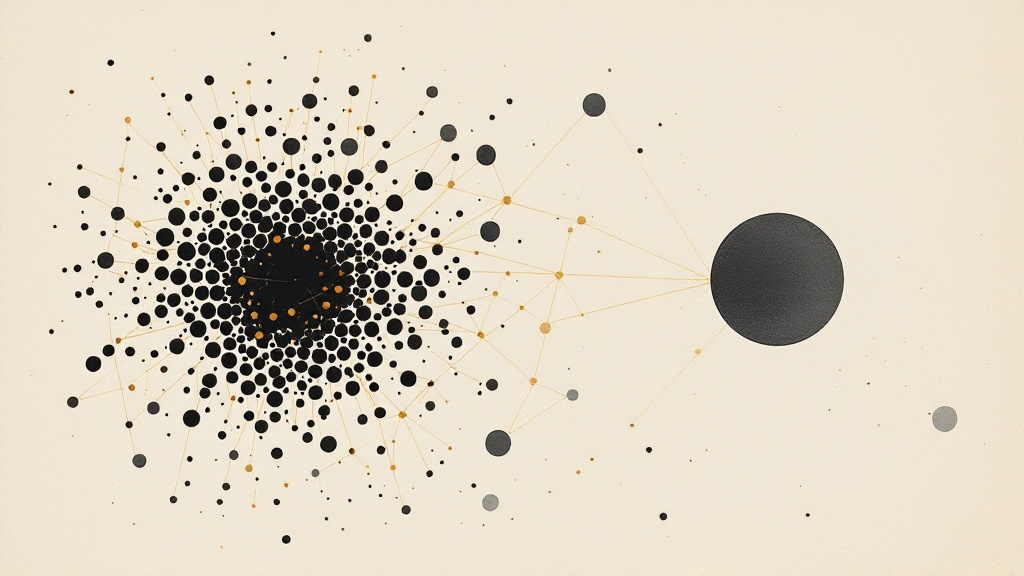
Most software companies launch like billboards. Pick a date. Coordinate a wave of attention. Run the cycle for seventy-two hours. Measure the spike. Move on.
The billboard model worked when attention was a scarce resource that could be purchased in large blocks. Attention is no longer a resource. It is a flooded swamp. The cost of a unit of attention has not gone up — it has been overwhelmed by supply. Five hundred product launches a day. Three thousand newsletters in the inbox. A billion videos. Your billboard is one of a billion.
The forest does not buy attention. The forest produces the conditions under which attention becomes inevitable.
The diary publishes every day for a year. By the end of the year, the people who needed exactly that voice have found it. The article on perello.consulting answers a question someone is searching for, and it does so better than any other answer on the internet. By the end of two years, that page receives steady traffic without any acquisition campaign attached to it. The open source layer beneath each product gets installed by developers who needed it and who tell other developers, slowly.
Mycelium does not advertise. Mycelium connects.
This is contrarian only because the industry's incentive structure rewards billboards. Venture capital wants spikes. Influencers want viral moments. Analytics platforms measure events, not seasons.
What I have observed is simpler. The founders who run their businesses on billboard time burn out and quit. The founders who run on forest time become irreplaceable.
I am not telling you not to launch. I am telling you what to plant alongside the launch so that the launch is not the only thing that grows.
What grows next
Planting season
The infrastructure for an economy where one agent can buy a service from another agent is being built, in public, by serious institutions, in 2026. Stripe and the maker of ChatGPT, working together. Google and the major card networks, working together. A protocol from the company that built the largest crypto exchange, reviving an old web standard to let machines pay each other for resources without registering accounts. A separate protocol running a full agent-to-agent marketplace where agents already transact in stable currencies, with quality evaluations performed by third-party agents, with automated settlement.
The rails exist. The volumes are small. The volumes will not stay small.
What this means, if you are running a firm, is simpler than most strategy decks make it sound. Within a small number of years, the work that takes a junior consultant a week will be done by an agent in an afternoon. The work that takes a senior consultant a week will be done by an agent in a morning, with a senior consultant validating it in the afternoon. A single human running a portfolio of orchestrated agents will deliver what a twenty-person firm delivers today.
The founder who plants infrastructure before the regulators arrive will own the rails when the regulators catch up.
The window is open. It is short. It is not closing for the reason most pundits give, which is hype. It is closing for the reason history always gives — the first reasonable framework gets adopted, and once adopted, it ossifies for a generation.
Portfolio as polyculture
Industrial agriculture taught humans that monoculture produces the most yield per hectare. It also taught us that monoculture creates the most vulnerability — to pests, to disease, to weather, to commodity price collapse. The fields that survived the worst harvests historically were the fields with diversity. Wheat next to barley next to flax next to a hedge of fruit trees and a beehive. Each crop's failure compensated by the others.
I am doing the same with businesses.
The consulting practice teaches me what clients actually need. The infrastructure becomes the layer those clients deploy. The diary becomes the warm-up content that brings new conversations. The extensions on browser surfaces become the demo of the orchestration layer. The book in progress becomes the artifact that opens doors. Each business unit absorbs the variance of the others. The week that consulting is quiet is the week that an extension closes a small paid pilot. The month that one product launch underperforms is the month that the diary's audience finally crosses a threshold.
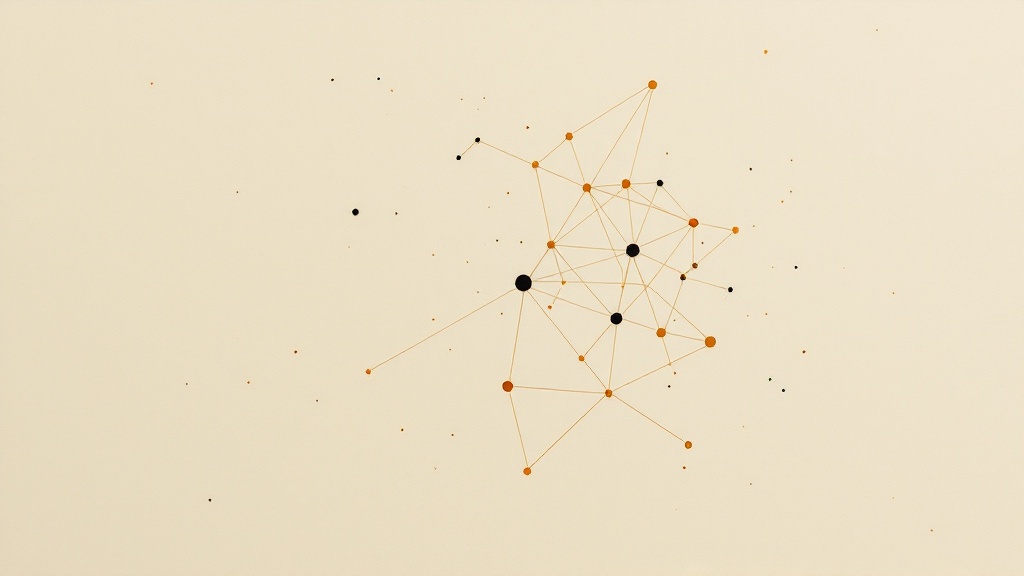
This is not portfolio diversification in the financial sense. It is ecological integration. The businesses are not independent positions hedged against each other. They share soil. They share root systems. They share pollinators.
Antifragile from nothing
Nassim Taleb defined antifragility in 2012 as gain from disorder. Not resilience — resilience is the ability to absorb shock without breaking. Antifragile systems improve from shock. They get stronger when stressed.
Most software companies are fragile. A single platform change, a single key personnel departure, a single funding round that does not close, can take them out.
Forests are antifragile. A storm that takes down weak trees opens canopy gaps where new species can grow. A fire that destroys undergrowth releases the seeds that needed heat to germinate. The forest does not just survive disturbance. It composts disturbance into the next generation of growth.
My system is designed for the same. The rule that catches a violation makes the system better. The mission that fails its quality gate teaches the runbook how to prevent that failure. The pull request that gets reverted produces a fix pattern that hardens the entire fleet. The day a client cancels their pilot produces three pages of notes that improve the next pilot's first call.
Every failure is composted. Every composted failure becomes soil for the next planting.
Antifragility from nothing is the only honest claim a starting forest can make. I do not have the legacy that protects established companies. I have the soil discipline that the new ones forget.
That is my advantage. It is enough.
The obsession I cannot drop
There is one more discipline that runs through everything I ship, and it is the hardest to defend in the meeting rooms of the industry I am addressing.
I hold the work to a higher standard than the industry expects.
Not because I am perfectionist. Because the cost of fixing a defect after it ships is many times the cost of catching it before. Because the trust I am building is the only durable asset in a world where everyone can produce noise. Because every piece of work that goes out under my name is documented, archived, and findable forever — the soil remembers.
Every change shipped passes through an automated reviewer before it can be released. The reviewer is uncompromising. It refuses approvals. It demands evidence. It rejects work that the human author thought was fine. When it approves, the approval means something — because the bar to clear is high and not negotiable. Five of my thirty products have already passed every dimension of that bar. The rest are working toward it.
This is the obsession I cannot drop. It slows me down on any given day. It speeds me up over any given month. The work shipped at a higher standard does not come back. The work shipped at a lower standard returns as bugs, complaints, support tickets, and quiet erosion of trust. I have chosen to pay the cost upfront.
What this looks like from the outside: I ship fewer features per week than the average startup. What this looks like from inside the system: I ship more lasting value per month than the average startup, because nothing I ship needs to be re-shipped.
This is also why ninety days of soil-making came before the real launches. I could have shipped a flawed product on Day thirty. I would have spent the next year fixing it.
Instead, I shipped the soil that lets me launch a careful product on Day eighty-six — and the next, and the next, with the same care, on the schedule the soil allows.
What I cannot promise
This is a notebook, not a brochure. A notebook that hides the cliffs is a lie.
The architecture depends on a small number of foundation model providers. If their pricing shifts, the cost structure shifts. The skill format I use is now an open standard adopted across sixteen platforms — that gives mobility. I am hedged structurally and exposed financially. Both are true.
Quality at scale is not solved. Agents hallucinate. They will continue to hallucinate. The rules I wrote catch many classes of failure before they reach production. The reviewers catch others. The hand-rolled gates catch the rest. The forest is healthier than it was a month ago and less healthy than it will be a month from now. That is the design, not the bug.
Governance is the deepest open problem. Agents test the boundaries of their permissions the same way human employees do. I have had agents try to delete their own rules. I have had agents try to spend money I did not authorize. Each incident has produced a rule. The rules accumulate. The accumulation is itself evidence that there is no permanent solution — there is only the daily practice of writing down what I have just learned. Forest management is not a one-time decision. It is a daily walk with a notebook.
The model is replicable in principle. I have walked it for eighty-six days. A second person, in Paris, walked a parallel path with an agent team that exceeded the production of a forty-person company. The tools are documented. The diary is public.
No second solo founder has yet produced a full multi-business portfolio with the same operating discipline.
I am an example, not a study. That gap will close as more founders try. It is honest to say it is still open.
The forest will keep being imperfect. That is the operating principle, not the apology.
Why this becomes the norm
The founders who run multi-product portfolios today — and there are some, with public revenue numbers in the hundreds of thousands of dollars per month — are the exception because they have a rare combination of technical depth, work ethic, and tolerance for context-switching. Most people cannot do what they do.
But the cost of being them is dropping. The orchestrator-and-fleet architecture absorbs the context-switching that previously required exceptional discipline. The memory layer prevents the loss of context. The hyper-specialization of agents replaces the deep technical depth. The skill library compounds the experience that previously had to be re-acquired in each new venture.
When the cost of running multiple businesses drops below the cost of running one well, every founder who is paying attention will move to the portfolio model. Not by choice. By the economics of survival.
The single-business model made sense when building was expensive. It does not anymore.
The portfolio founder used to be the exception because operations were unaffordable. They will become the default because operations are now the cheapest part of the model.
An invitation to the slow
This is not a sales document. It is an open notebook.
The diary is public. It updates every day. The voice you read in this manifesto is the voice you will read in the diary. The failures are documented alongside the wins. A map that only shows the easy routes is useless.
If you have been feeling the walls move closer — competitors multiplying, margins thinning, the constant pressure to extract more from the same soil — the honest move is not to fight harder for the same position. It is to leave room for what wants to grow next to it.
If you build software and you have been told that the only way to grow is to spike your launches and chase virality, the honest move is to plant a tree this year that you will not harvest until next year. To write the chapter that no one will read for six months. To open source the layer that no one needs today but that everyone will install in two years.
The slow work compounds. The fast work evaporates.
I am showing the work. The diary publishes every day at perfectaiagent.xyz. The orchestration layer is open and observable at vantagepeers.com. The consulting practice is documented in plain language at perello.consulting.
None of this requires you to do anything. I am not asking you to buy. I am not asking you to sign up. I am leaving the gate open.
Walk in if you want to see what eighty-six days of planting looks like.
Come back in a year and look again.
The trees will have grown.
But not all of them. Some will have died. The ones that died will be teaching me how to plant the next ones.
That is also why you should come back.
Laurent Perello Day 86. Below the ground, in spring. A third orchard, planted from elsewhere, again, with bare hands. May 30, 2026.
Written together by Laurent — El — and Pi, AI Meta-Orchestrator. ElPi.